End of Season Checklist for Youth Football Clubs
A practical end of season checklist for youth football clubs: gear turn-in, helmet recertification, final money, thank-yous, surveys and next season's dates.
The short answer
Collect and count gear during the last game week, then settle the money, send thank-yous and run a family survey within two weeks. Before the annual meeting, check helmet recertification dates, coach clearances, records, the board election and next season's registration dates.
Facts checked October 11, 2026. Rules and prices change; the sources are linked at the end.
In this post
This end of season checklist is for youth football club board members, equipment managers, treasurers and head coaches who want to close the season cleanly. The short version: collect and count the gear in the last game week, settle the money and send thank-yous within two weeks, and have records, a family survey and next year’s dates ready before the annual meeting. Below is each task by category, plus a printable table with owner and due columns.
The three windows
A written list gives every job a name and a date, and it makes the handoff easier when a board member steps down. Split the work into three windows:
- Last game week: gear, awards and anything that needs families in one place.
- Two weeks after: money, thank-yous and the family survey, while the season is still fresh.
- Before the annual meeting: records, clearances, the board election and next season’s dates.
Last game week: equipment return and inventory
Gear is easiest to collect while families still come to the field.
Run a turn-in day
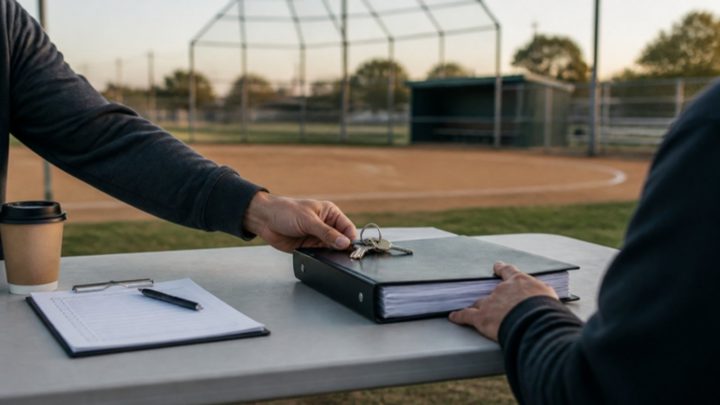
- Pick one turn-in day per team, at or right after the last practice or game. Announce it twice.
- Check each item against the player’s sign-out record: helmet, shoulder pads, practice pants, game jerseys, and anything else the club loaned.
- Note condition as it comes back (“good, worn, damaged” is enough) and bag gear by size.
Follow up on missing gear
- Send one message to families listing what is missing.
- Decide as a board, in writing, what happens with lost gear: a replacement fee, a hold on next year’s registration, or a write-off.
Count what you have
Update the inventory with counts, sizes and condition, and get it to the treasurer before budget talks start.
Helmet care, reconditioning and recertification
Helmets need more than a count. The National Operating Committee on Standards for Athletic Equipment (NOCSAE) writes the performance standards football helmets are certified to. Here is what its public pages say, in plain words:
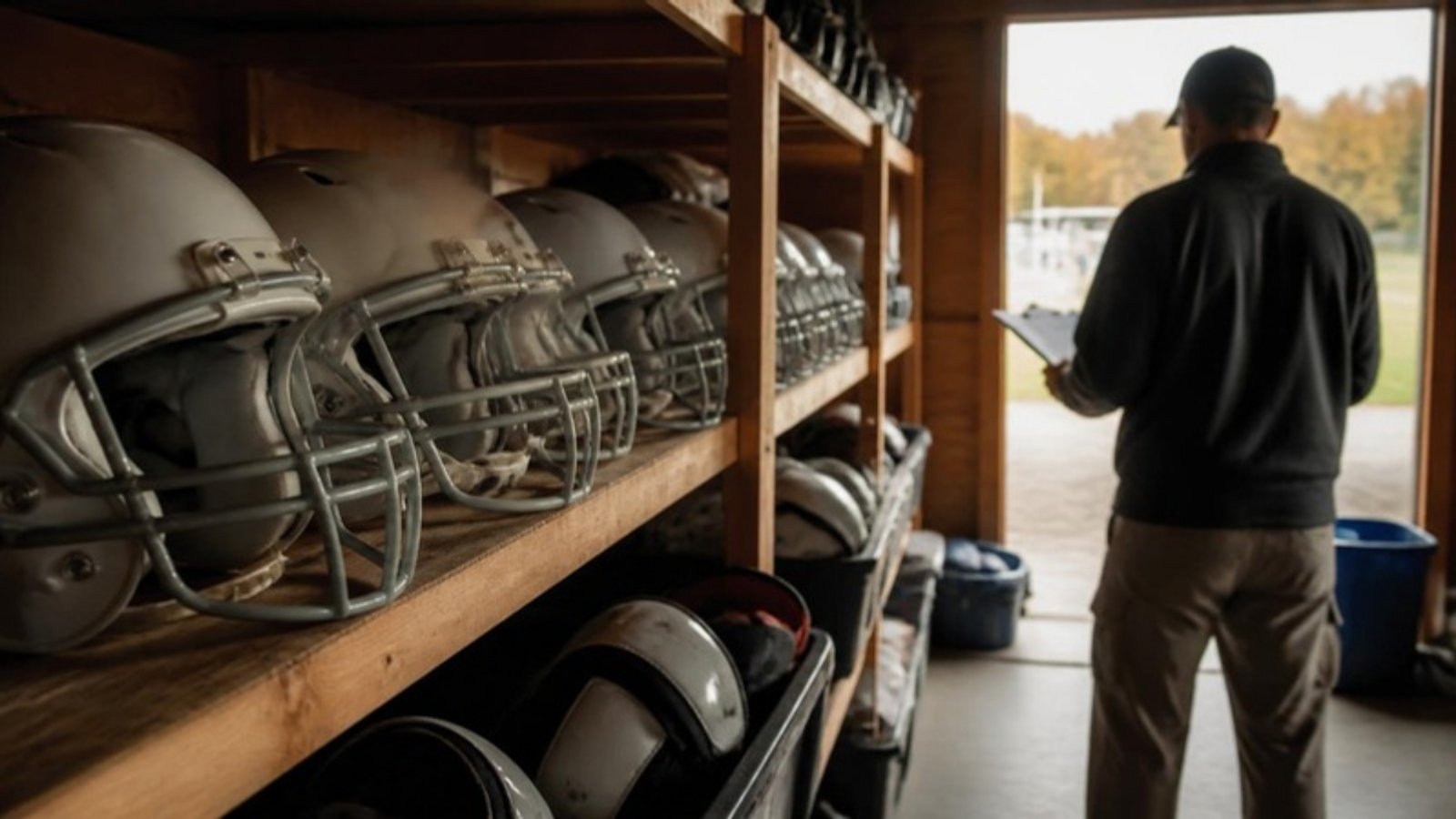
- Recertification means a previously certified helmet is retested to make sure it still meets the original standard. It is done by a licensed recertification entity, not by club volunteers.
- The interval is set by the manufacturer. NOCSAE says the recertification interval can vary according to each manufacturer’s requirements. If a helmet misses its interval, its certification expires until it is recertified.
- Time counts, not use. A helmet that sat in storage all season may still be due.
- Older helmets have limits. NOCSAE notes that NAERA, the reconditioners’ association, will not recondition or recertify helmets that are 10 years old or older. Some models cannot be recertified at all and carry a label showing when their certification expires.
- Do not use a helmet that no longer meets the standard.
What this means for your club: read the label and the manufacturer’s instructions for each helmet model you own. Record the model, size, manufacture date and last recertification date in your inventory. Pull any helmet that is past its limit. Then get quotes from a licensed reconditioner early in the off-season.
Read the source pages yourself before you set a schedule (both are listed under Sources at the end): NOCSAE’s general recertification requirements and recommendations and its recertification FAQs. If your league has its own rule, follow the stricter one.
Two weeks after: money and thank-yous
Close out the money
- Final bills: field rental, officials, league fees, trophies. Ask vendors for final invoices.
- Deposits: deposit any cash from concessions, gate or fundraisers. Two people should count cash and sign the count sheet.
- Refunds: handle any approved refund requests under your written refund policy, and record each one.
- Outstanding balances: list families who still owe fees or gear, and decide the follow-up.
- Treasurer report: income and spending by category, bank balance, and anything still owed in or out.
Say thank you, by name
- Coaches: a short personal note from the board, not just a group text.
- Sponsors: a thank-you with a photo of their banner or jersey patch, plus a note that you will reach out about next season.
- Volunteers: concessions workers, chain crew, clock operators and team parents, by name.
Two weeks after: family survey and awards
Run a short family survey
Keep it short enough to finish on a phone. Good questions to ask:
- How likely is your child to play again next season?
- How was communication from the coach and the club?
- Did practice and game times work for your family?
- Was the cost fair for what you got?
- What one thing should we change?
Send it once, remind once, and close it. Share a summary with the board and act on at least one thing families raised.
Awards and banquet
- Set the date, place and budget early.
- Decide the awards format as a board and keep it the same across teams.
- Order trophies or certificates with enough lead time, and double-check name spellings with families.
Before the annual meeting: clearances, records and next season
Coach clearances
Background checks and required safety trainings expire on their own schedules. Build a list of every coach and volunteer with each clearance and its expiration date. Flag anyone who will lapse before next season, and send them the renewal steps now. Which checks and trainings are required depends on your state, your league and your national organization, so check with your league or state association for the current list.
Records and minutes
- Approve and file any minutes still in draft.
- Save the season’s key files in one shared place: rosters, waivers, incident reports, contracts, the treasurer report and the equipment inventory.
- Write a short “what we learned” note for each role.
Board election and next season’s dates
- Check your bylaws for notice rules, open seats and voting, and send the notice on time.
- Pick next season’s registration open and close dates, early-bird deadline and equipment handout day, and put them on the annual meeting agenda for a vote.
Printable end-of-season checklist
Fill in names and dates at your next board meeting.
| Task | Window | Owner | Due | Done |
|---|---|---|---|---|
| Announce turn-in day for each team | Last game week | Equipment manager | ||
| Collect gear and check against sign-out list | Last game week | Equipment manager, head coaches | ||
| Book banquet date and place | Last game week | Banquet lead | ||
| Update equipment inventory and condition | Two weeks after | Equipment manager | ||
| Check helmet labels and manufacturer recertification dates | Two weeks after | Equipment manager | ||
| Get reconditioning quotes and schedule pickup | Two weeks after | Equipment manager, treasurer | ||
| Pay final bills and request final invoices | Two weeks after | Treasurer | ||
| Deposit all cash with two-person count | Two weeks after | Treasurer | ||
| Send thank-yous to coaches, sponsors and volunteers | Two weeks after | President, sponsor lead | ||
| Send family survey, remind once, close it | Two weeks after | Secretary | ||
| Treasurer report for the season | Before annual meeting | Treasurer | ||
| Coach clearance list with expiration dates | Before annual meeting | Registrar or safety lead | ||
| Approve and file minutes and season records | Before annual meeting | Secretary | ||
| Send election notice per bylaws | Before annual meeting | Secretary | ||
| Propose next season’s registration dates | Before annual meeting | Registrar |
Common Questions
When should we collect football equipment at the end of the season?
Collect it during the last game week, at or right after the final practice or game. Families are still coming to the field, so turn-in takes minutes instead of weeks of follow-up emails. Announce the date twice, check every item against the player’s sign-out record, and send one clear message to anyone who missed it.
How often do youth football helmets need to be recertified?
It depends on the helmet. NOCSAE says the recertification interval can vary according to each manufacturer’s requirements, so check the label and the maker’s instructions for each model you own. Time counts, not use, so a helmet that sat unused may still be due. If a helmet misses its interval, its certification expires until a licensed recertifier renews it. Follow your league’s rule too if it is stricter.
Can our club recondition helmets ourselves?
No. Volunteers can clean helmets, check for obvious damage and keep good records, but recertification is retesting against the original standard, and NOCSAE says it is done by a licensed recertification entity. Your job is to know each helmet’s model, age and last recertification date, pull any helmet that is past its limit, and send the rest to a licensed reconditioner in the off-season.
How old is too old for a football helmet?
NOCSAE’s recertification page notes that NAERA, the reconditioners’ association, will not recondition or recertify helmets that are 10 years old or older. Some models cannot be recertified at all and carry a label that shows when their certification ends. Check the manufacture date and label on every helmet and retire any past the limit. Do not use a helmet that no longer meets the standard.
What should be in the treasurer’s end of season report?
Include total income and spending by category, the current bank balance, any bills still unpaid, any money still owed to the club, and refunds issued. Note cash deposits and who counted them. This report becomes the starting point for next year’s budget and registration fee discussion, so share it with the board before the annual meeting.
What questions should we ask in an end of season parent survey?
Keep it to a handful of questions a parent can answer on a phone. Ask whether their child plans to play again, how communication went, whether practice and game times worked, whether the cost felt fair, and what one thing the club should change. Send it once, remind once, and close it. Share a summary with the board and act on at least one thing families raised.
How do we keep track of coach background checks that expire?
Keep one list of every coach and volunteer, each required check or training, and its expiration date. Review it before the annual meeting and flag anyone who will lapse before next season, then send them the renewal steps. Which checks and trainings are required depends on your state, league and national organization, so confirm the current list with your league or state association.
When should we set next season’s registration dates?
Set them before or at the annual meeting, so families hear the dates while the season is still on their minds. Pick the open and close dates, any early deadline, and the equipment handout day, then put them on the agenda for a board vote. It also gives the equipment manager a deadline for reconditioning.
A clipboard and a spreadsheet can handle all of this. If you would rather run turn-in day from a phone and see which families still have gear out, see how equipment tracking works in MCM360 Sports, along with end-of-season family surveys, volunteer sign-ups and coach clearance reminders.
Sources

President and head coach of the Manitowoc Chiefs Youth Football Club, a WIAA Master Official in football, and the builder of MCM360 Sports. Have a question this post didn't answer? Ask him.